
Got Band 6? Don't Just Rebook the IELTS Test
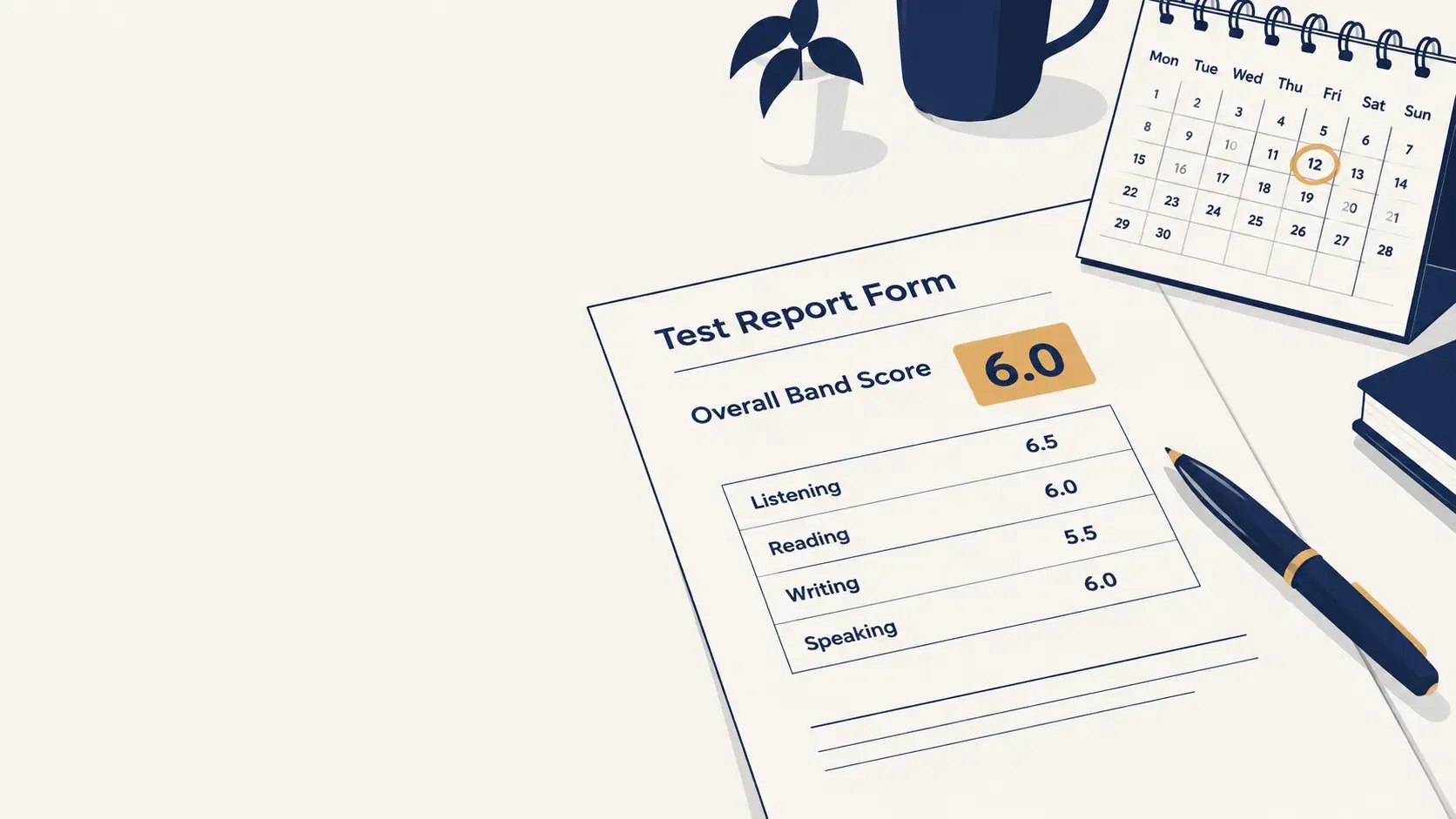
Your result arrives: Overall Band 6.0. You needed Band 7.0.
The instinct that follows is almost always the same one: maybe I was just unlucky — I'll book another test and try again.
It is one of the most common, and most expensive, mistakes IELTS candidates make. IELTS does not measure luck. It measures your English language ability on the day you sat it, and a Band 6.0 result is telling you, quite precisely, that your performance that day was around Band 6.0. Sitting the same test again next month does not change that on its own.
IELTS is not a game of luck
There is genuine variation between attempts. You may get a Speaking topic you know well, feel calmer on the day, or click better with one examiner than another. Real, but small — usually a few tenths of a band, not a full band. If your underlying level is Band 6.0, resitting the same test next week will not turn it into Band 7.0 by itself.
So the useful question is not when should I book my next test? It is: what is actually preventing me from reaching Band 7.0?
Your first Band 6 is feedback, not a failure
A first IELTS result is one of the most useful pieces of information you will get in your preparation, because it gives you a precise starting point instead of a guess. Reframe it: not I was unlucky, but now I know where I stand.
Your four skill scores point at specific, fixable gaps:
- Writing may be capped because your ideas are not developed with enough support or specific detail.
- Vocabulary may be wide enough to communicate but not accurate or flexible enough for a higher band.
- Speaking may carry frequent grammatical errors that a fluent delivery is masking.
- Listening may be fine for general understanding but losing marks on spelling, or on keeping pace with the recording.
- Reading may not be a vocabulary problem at all — it may be slow paraphrase recognition or poor time management across sections.
The score is feedback. The next step is using it.
Band 6 to Band 7 is a skill jump, not one more attempt
On the scale, 6 to 7 looks like a single step. In practice it demands noticeably more control, accuracy, flexibility and consistency across every skill.
Take vocabulary as an example. Knowing that two words are roughly synonymous is not the same as knowing how each is actually used — its typical collocations, its register, its grammatical behaviour, and the contexts where it fits naturally. The same jump in precision applies to grammar, pronunciation, and to how convincingly you develop an argument in Writing or Speaking. That is real work, and it is why moving from Band 6.0 to Band 7.0 commonly takes weeks or months of focused preparation, depending on your starting point. There is no reliable shortcut — but there is a faster route than blind repetition, which is precise, sentence-level feedback against the actual band descriptors, the approach behind tools like the Zadway AI essay checker.
Don't mistake familiarity with the test for improvement in English
Sit IELTS once and you gain real familiarity: what the Speaking interview feels like, how the Writing tasks are structured, that Listening answers must be transcribed exactly, and what the Reading question types look like. That familiarity can lift your performance slightly.
But test familiarity is not English improvement. Whatever weaknesses your first test revealed in grammar, vocabulary, pronunciation, reading comprehension or writing development will still be there next time, wearing the same disguise. You may know the test better. That is not the same as knowing English better.
A retake option worth knowing about first
Before booking a full resit, check whether you actually need one. IELTS One Skill Retake (OSR), available for computer-delivered IELTS in most countries, lets you resit a single skill — Listening, Reading, Writing or Speaking — within 60 days of your original test date, and combines that new score with your other three into a single, updated Test Report Form.
OSR is a genuinely useful shortcut if one skill is clearly the bottleneck and you are roughly half a band away. It is the wrong tool if your gaps are spread across two or more skills, or if you need more than a one-band jump in that skill — in both of those cases, a quick retake just re-measures the same weaknesses, and a full preparation cycle serves you better. Availability and terms vary by country and test centre, so confirm the current rules with your local test centre or the official IELTS site before relying on it.
What to do instead of rebooking immediately
1. Know the score you actually need
Check the exact band you need in each individual skill, not just the overall figure — many university and visa requirements set a minimum per skill as well as an overall target. For some candidates, lifting one weak skill closes the whole gap; for others, two or three skills need work.
2. Identify which skill is really holding you back
An overall Band 6.0 can hide very different profiles — a candidate at 6.5/6.5/5.5/6.5 has a completely different problem to one at 6.0/6.0/6.0/6.0. Look at your four scores individually before deciding where to focus.
3. Name your actual weaknesses
"My English isn't good enough" is not specific enough to act on. Push further: Is your vocabulary too narrow, or wide but imprecise? Do you make the same grammar mistakes repeatedly? Do you struggle to develop ideas in Writing, or to recognise paraphrase in Reading and Listening? Do you speak fluently but with frequent grammatical slips? The more precisely you name the problem, the more directly you can work on it — this is exactly what sentence-level, examiner-style feedback is for.
4. Ask honestly whether anything has actually changed
Before booking again, ask what is different since your last attempt. If the honest answer is nothing — I'm just hoping for a better result, you are rebooking too soon.
Prepare first. Test later.
Your IELTS test should measure your preparation, not substitute for it. The productive sequence looks like this:
Study → practise → identify weaknesses → improve → measure progress → sit IELTS
not this:
Sit IELTS → get Band 6 → sit IELTS again → hope for Band 7
The second pattern turns into an expensive cycle of repeated tests with little real progress between them. Every attempt costs money, time and energy that would do more for your score spent on targeted preparation instead.
Your first Band 6 can be the start of your Band 7 journey
A Band 6.0 result is not I failed. It is now I know exactly what to improve. Use that information: build vocabulary with real accuracy, tighten grammatical control, practise Writing and Speaking with feedback, sharpen Reading and Listening technique, and give yourself the time the improvement genuinely needs.
When you next sit IELTS, sit there because you have done the work — not because you are hoping the second attempt gets luckier than the first. Don't chase a better score by repeating the test. Build the English ability that produces the score you need.
Frequently asked questions
Should I just retake the whole IELTS test after getting Band 6?
Only once you know why you scored Band 6. If your weaknesses are the same as last time, a rebooked test measures the same English again and usually produces the same result. Identify and work on the gap first.
What is the IELTS One Skill Retake and does it help Band 6 candidates?
One Skill Retake lets a computer-delivered IELTS candidate resit a single skill within 60 days of the original test, combined with the other three into one Test Report Form. It suits someone strong in three skills and short by half a band in the fourth — not someone with weaknesses spread across several skills, who needs a full preparation cycle instead.
How long does it take to go from Band 6 to Band 7?
There is no fixed timeline. Candidates close to Band 7 with one clear weakness can sometimes close the gap in a few focused weeks. Candidates with weaknesses spread across grammar, vocabulary and task achievement typically need several months of deliberate practice. Precision in identifying the gap matters more than the calendar.
How do I know which skill is actually holding my score back?
Look at your four individual band scores, not just the overall figure, and ask why each one is what it is. "My English isn't good enough" isn't specific enough to act on — you need to know, for example, whether Writing is capped by task development, grammatical range, or vocabulary accuracy. A detailed error breakdown or examiner-style marking tool such as Zadway can show you exactly where each skill's score is coming from.
Find your gap before you find your next test date
Zadway's AI examiner marks your Writing against the real band descriptors, flags errors at sentence level, and shows Band 7 and Band 8 rewrites of your own work — so instead of guessing what to fix before your next attempt, you can see it. Learn more about our approach on how it works, see plans for students, or start practising for free.
See Also
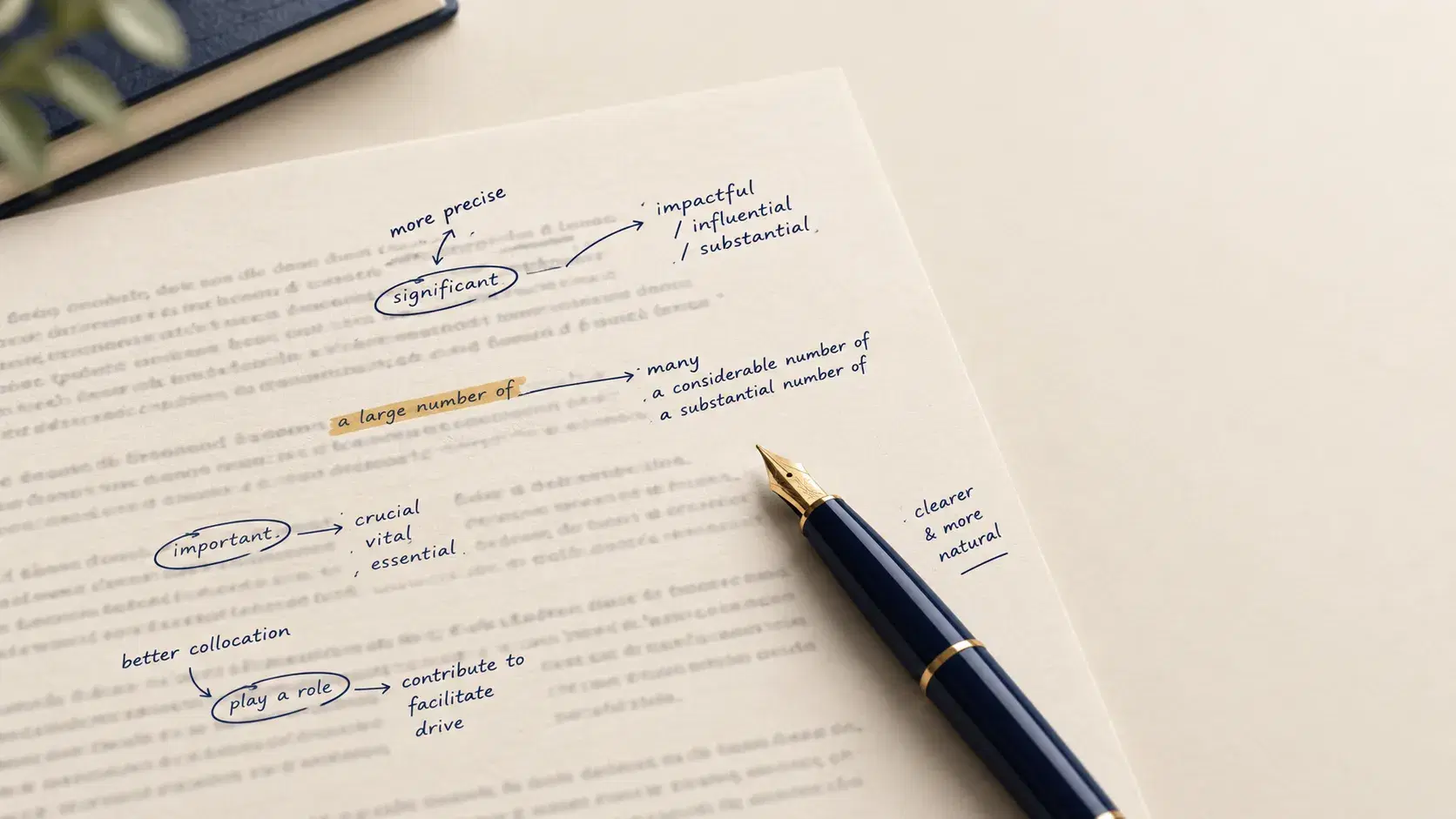
IELTS Vocabulary Accuracy: The Key to a High Score
Learn why IELTS vocabulary accuracy matters more than word count, and follow an examiner's step-by-step method to use words precisely across all four skills.
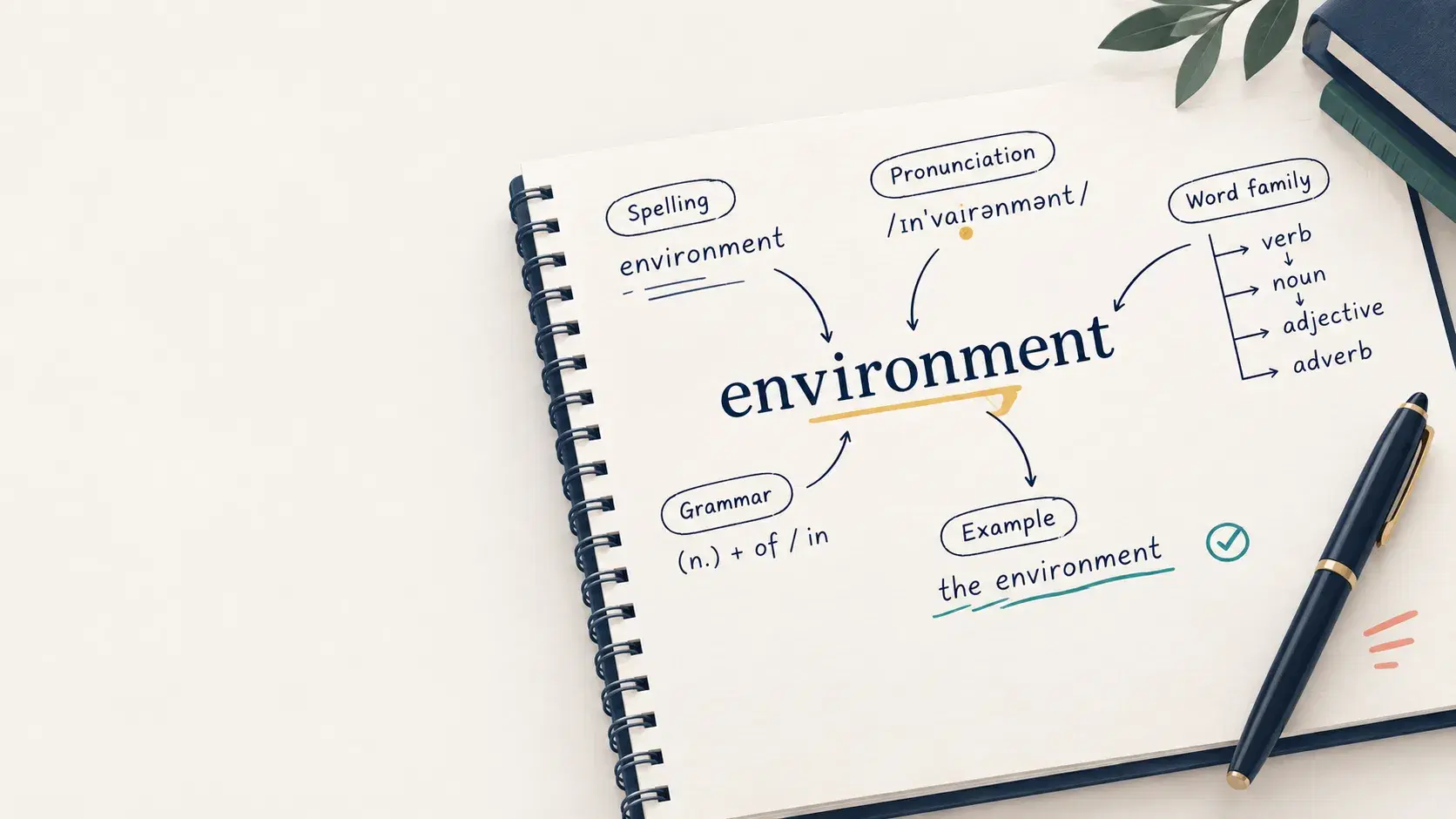
How to Learn IELTS Vocabulary Properly
Knowing a definition isn't knowing a word. An examiner's method for learning IELTS vocabulary in depth: spelling, grammar, collocation and active use.

How IELTS Writing Task 2 Is Scored: An Examiner's Guide
Discover exactly how IELTS Writing Task 2 is scored across all four criteria, with real examiner insight and before-and-after essay examples.