
IELTS Vocabulary Accuracy: The Key to a High Score
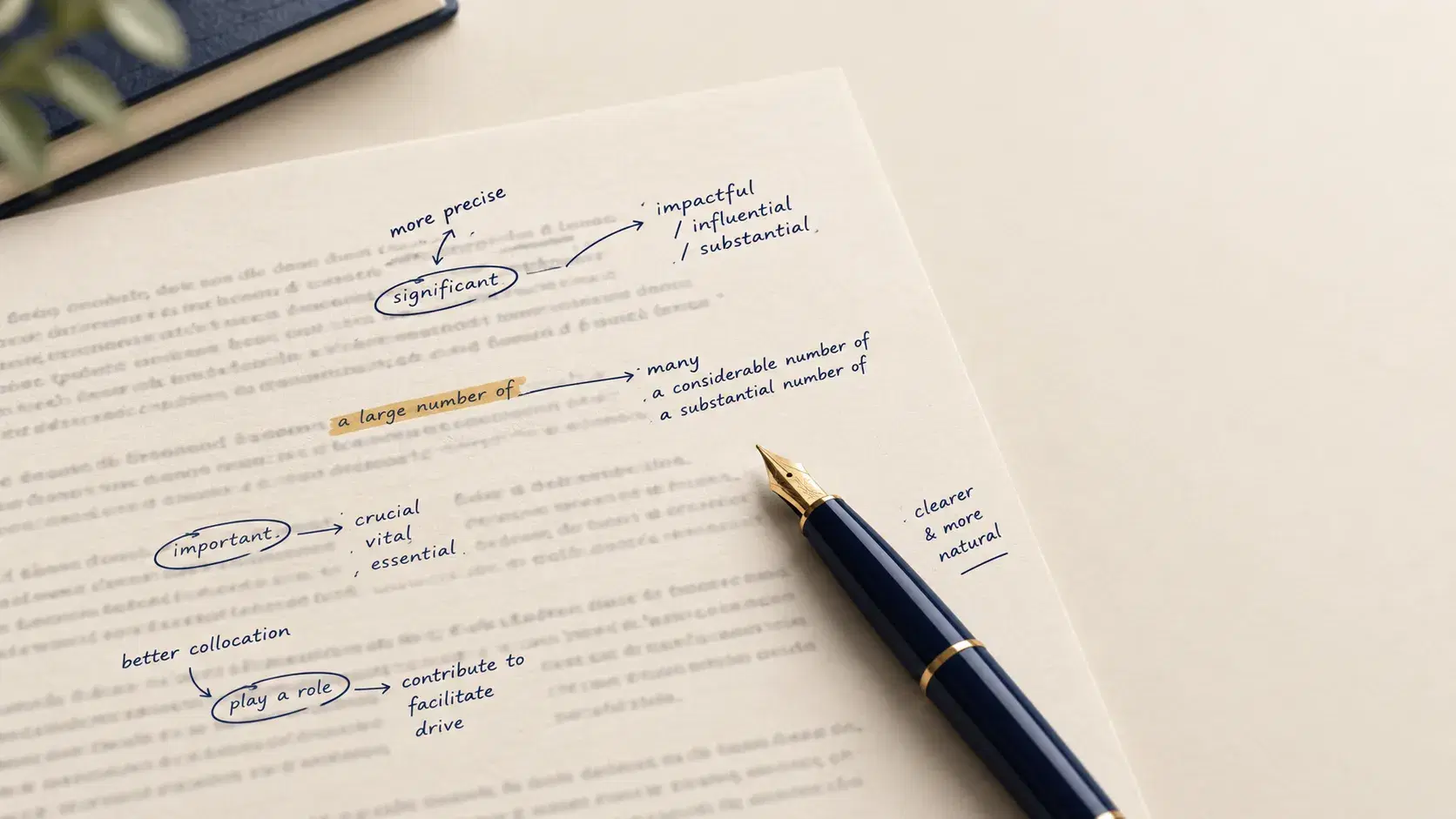
Why vocabulary accuracy decides your band
Most candidates treat vocabulary as a Writing and Speaking concern. That is only half the picture. The words you know, and how precisely you know them, shape every part of the test: Reading and Listening constantly restate the question in different language, while Writing and Speaking reward you for saying exactly what you mean. The candidates who move from Band 6 to Band 7 are rarely the ones with the longest word lists. They are the ones who use the words they already have with control.
Range gets you noticed; accuracy gets you the band
Examiners do reward a wide vocabulary, but only when it is used correctly. A rare word in the wrong place, a synonym that does not quite fit, or a collocation that sounds unnatural all pull your score back down. Think of range and accuracy as two dials: turning up range while accuracy stays low keeps you stuck. This guide shows you how to raise both together.
What the examiner is looking for
In IELTS Writing, vocabulary is marked under Lexical Resource, which is worth a quarter of your marks on each task. The same criterion applies in Speaking. Examiners are not counting difficult words; they are judging how well your vocabulary does its job.
Range, accuracy, appropriacy and collocation
The Lexical Resource descriptors reward four things:
- Range — enough variety to discuss the topic without repeating yourself.
- Accuracy — correct meaning, correct word form, correct spelling.
- Appropriacy — vocabulary that fits the topic, the task and the register.
- Collocation — words used in their natural partnerships, such as make a decision or heavy traffic.
Band 6 versus Band 7 in plain terms
At Band 6, there is enough vocabulary to deal with the topic, with some attempts at less common words, but noticeable errors in word choice, form or collocation.
At Band 7, the vocabulary is flexible and precise, less common words are used with some skill, and errors in word choice or spelling are only occasional.
The gap between the two is almost entirely about accuracy, not quantity.
The "I can guess the meaning" trap
Guessing from context is a useful reading skill, but leaning on it too heavily costs marks. Imagine you meet this sentence in a Reading passage:
The government introduced measures to curb excessive household consumption.
If you do not know curb, you might guess "increase", "control" or "reduce". You may even guess correctly. But the question could ask:
What measures were introduced to reduce household consumption?
The passage never has to contain the word reduce. If you only scan for the exact keyword, you walk straight past the answer.
IELTS rarely gives you the same word twice
The test is built on paraphrase. The question uses one expression; the passage or recording uses another. Training yourself to see these pairs instantly is one of the highest-value things you can do before test day.
| Question | Passage or recording |
|---|---|
| reduce | decrease, cut, curb, minimise |
| important | significant, crucial, essential |
| problem | issue, difficulty, challenge |
| increase | rise, grow, expand, climb |
| expensive | costly, high-priced |
| result | outcome, consequence, effect |
| job | employment, occupation, position |
| young people | adolescents, teenagers, youths |
| help | assist, support, facilitate |
| dangerous | hazardous, risky, unsafe |
A step-by-step method to build vocabulary accuracy
You cannot learn every word in English, and you do not need to. Work through the seven steps below and apply them to the words that actually recur in IELTS topics: education, environment, technology, health, work, urban life and government.
Step 1 — Ask "how well do I know this word?"
Stop sorting words into "known" and "unknown". For every important word, ask whether you can recognise it, explain it, name a synonym and an antonym, use it in a sentence, list its word family, and say which words it usually appears with. That checklist is the difference between memorising vocabulary and owning it.
Step 2 — Learn every key word as a network
A dictionary translation is not enough. For each word you decide to learn, record all of the following:
- The word — significant
- Meaning — important or noticeable
- Synonyms — considerable, substantial, notable
- Antonyms — insignificant, minor, negligible
- Word family — significance, significantly, signify
- Collocations — a significant increase, a significant impact, a significant role
- Example sentence — The government has made a significant investment in renewable energy.
- Context — economics, environment, education, technology
Now you are not learning one word; you are learning a system you can use under pressure.
Step 3 — Train paraphrase recognition for Reading and Listening
Take a practice question and, before you read or listen, rewrite it in your own words. Then work through the text matching ideas rather than letters. For example, the question "What caused the decline in agricultural production?" might be answered by "Farmers experienced a substantial reduction in crop yields as a consequence of prolonged drought." You have to connect decline to reduction, agricultural production to crop yields, and caused by to as a consequence of. A tool that marks against the band descriptors, such as the Zadway AI essay checker, can speed this training up by showing you the paraphrase you missed.
Step 4 — Learn collocations, not just single words
Vocabulary knowledge includes knowing which words belong together. We say make a decision, not do a decision; heavy traffic, not strong traffic. Learn these topic partnerships as fixed units:
- economic growth
- environmental damage
- social inequality
- academic performance
- employment opportunities
- public transport
- technological advancement
- government policy
Natural collocation is one of the clearest signals that separates a Band 7 answer from a Band 6 one.
Step 5 — Check appropriacy and register before you reach for a big word
Similar meanings do not make words interchangeable. Big, large, enormous, massive and substantial all relate to size but behave differently. Job and career are related but not the same: you can get a new job, but "I got a new career" does not work. Economic growth is not economical growth — the first is about the economy, the second about saving money. And while a government can raise or increase taxes, it cannot surge them. Before you use an advanced word, be sure it is accurate here, not just impressive.
Step 6 — Use your vocabulary to cut repetition
A strong vocabulary lets you express the same idea more than one way. Compare:
Education is important for society. Education helps young people develop important skills. Education is also important because it helps people get better jobs.
with:
Education plays a crucial role in society. It helps young people develop valuable skills and improves their employment prospects.
The second version is not "fancier" — it simply has the range to avoid circling the same two words.
Step 7 — Review in context and test yourself
Meet each word again in a new sentence a few days after you first record it, then a week later. Passive recognition fades fast, and what you need on test day is retrieval under time pressure, so quiz yourself rather than re-reading your notes.
Worked example: one sentence at three levels
Here is a single Task 2 idea written at three levels of lexical control. Notice that the jump is about precision and natural phrasing, not long words.
Original
Many people think that technology is important because it helps people.
The meaning is clear, but think, important and helps people are all low-precision. Nothing here shows range.
Band 7
Many people believe that technology is important because it makes everyday tasks easier and saves time.
Believe is more precise than think, and makes everyday tasks easier and saves time replaces the vague helps people with something concrete.
Band 8
Many people argue that technological development plays a crucial role in improving quality of life.
Argue signals a position in a debate, technological development is an accurate noun phrase, and plays a crucial role and quality of life are natural, topic-appropriate collocations — used correctly, not for show.
Common mistakes to avoid
- Over-paraphrasing. Swapping words that are not true synonyms changes your meaning. Sometimes the plain word is the right one.
- Choosing words for difficulty. A sentence stuffed with rare vocabulary that does not quite fit scores lower than a clear, accurate one.
- Learning words in isolation. A word with no collocations, no word family and no example is not usable knowledge.
- Ignoring antonyms and direction words. Decline against increase, expand against contract — these carry the meaning of comparison questions.
- Waiting for the exact question word in Listening. The speaker will paraphrase, and there is no rewind.
Frequently asked questions
Does vocabulary only matter for Writing and Speaking?
No. Lexical Resource is a marked criterion in Writing and Speaking, but Reading and Listening are built on paraphrase, so a wider and more accurate vocabulary raises all four scores.
How many words do I need for Band 7?
There is no target number. Band 7 is about using an everyday academic vocabulary flexibly and precisely, with only occasional errors. A candidate who uses 2,000 words accurately will out-score one who uses 5,000 words carelessly.
Are downloadable synonym lists useful?
Only as a starting point. A list of "1,000 IELTS synonyms" with no context teaches you words you will misuse. Turn any list into network entries — meaning, collocations, register, example — before you trust a word in the exam.
What is the fastest way to build vocabulary accuracy?
Go narrow and deep. Take the eight or nine topics that dominate IELTS, learn 15 to 20 key words per topic as full network entries, and revisit them in context. That beats skimming thousands of flashcards.
Can better vocabulary really lift my Reading and Listening scores?
Yes, often more than extra practice tests do. Most missed answers are missed because the candidate did not connect the question wording to a paraphrase in the text, not because they read or listened too slowly.
Put it into practice
The quickest way to find your own vocabulary gaps is to write a full essay and have it marked against the Lexical Resource descriptors. Zadway's AI examiner flags every word-choice, collocation and register issue at sentence level and shows you Band 7 and Band 8 rewrites of your own writing, so you can see precisely where accuracy breaks down. Compare plans, read more on Zadway for students, or start practising.
See Also
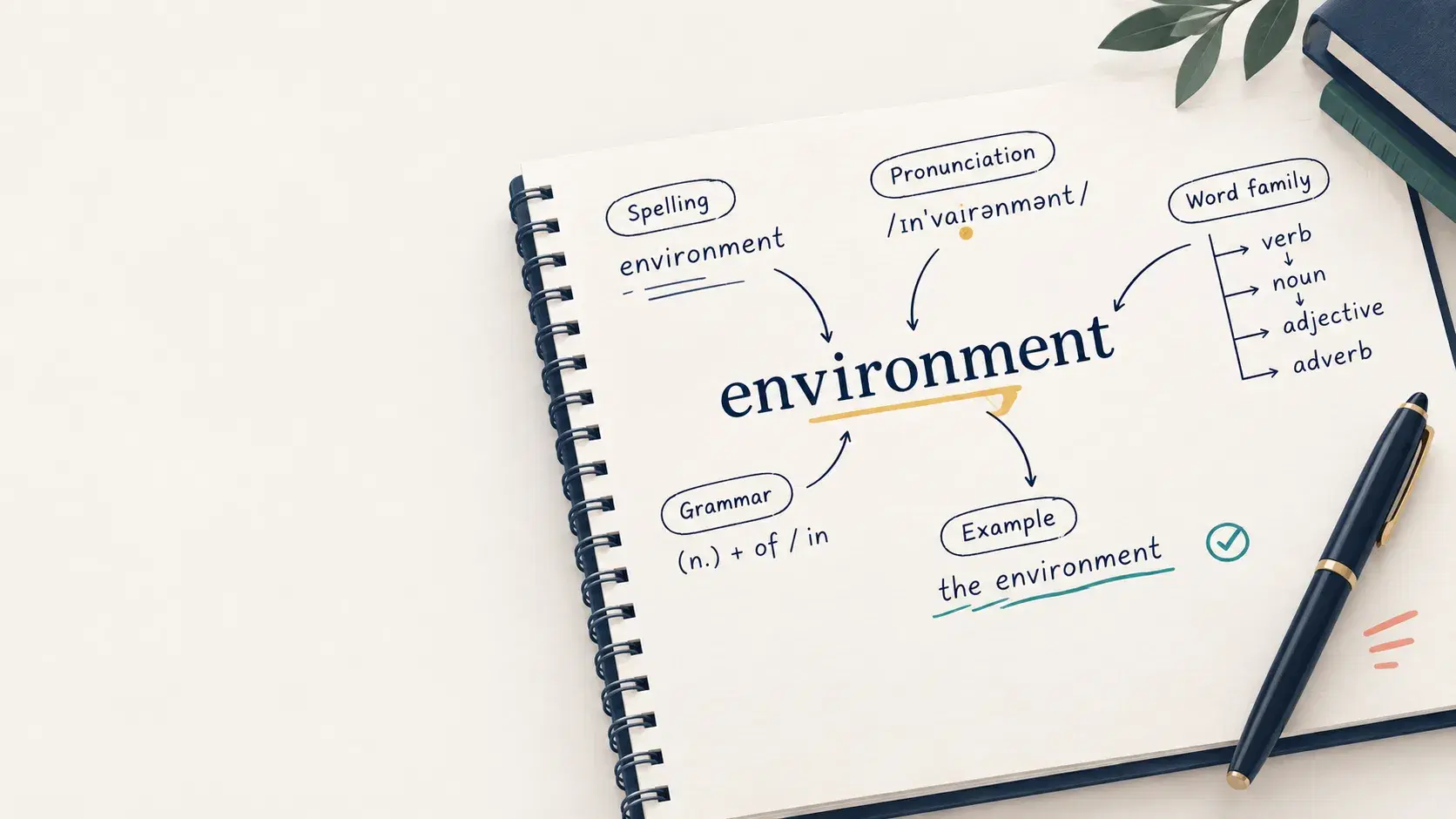
How to Learn IELTS Vocabulary Properly
Knowing a definition isn't knowing a word. An examiner's method for learning IELTS vocabulary in depth: spelling, grammar, collocation and active use.
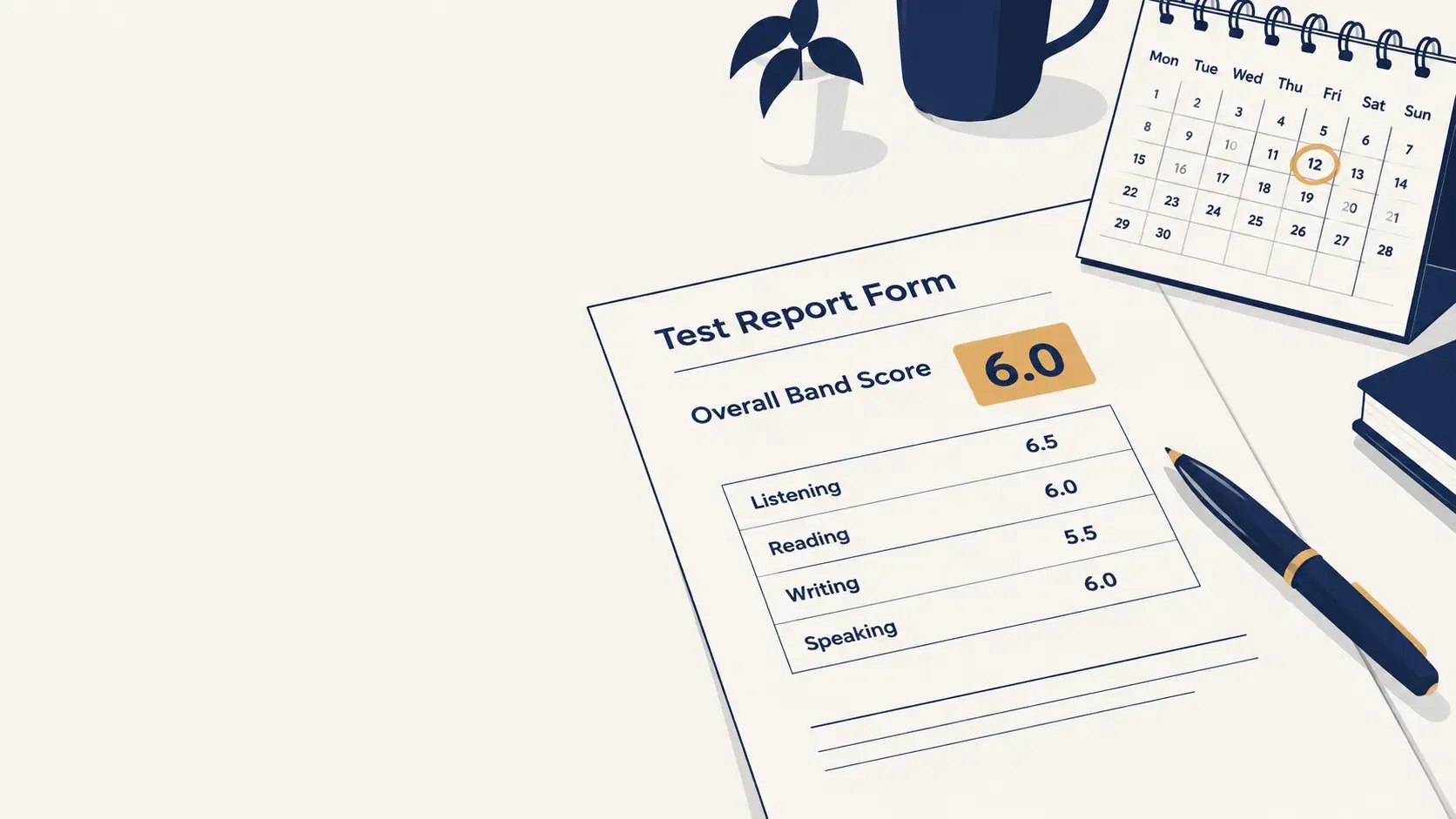
Got Band 6? Don't Just Rebook the IELTS Test
Scored Band 6 but need Band 7? Don't just rebook the IELTS test. Learn why retaking alone rarely works, and what to fix first, examiner-style.

How IELTS Writing Task 2 Is Scored: An Examiner's Guide
Discover exactly how IELTS Writing Task 2 is scored across all four criteria, with real examiner insight and before-and-after essay examples.