
How to Score High in the IELTS Listening Test
Zadway's Listening practice lets you drill every technique in this guide on full, exam-style four-part recordings, with instant scoring on every question type.
What the examiner is actually testing
IELTS Listening is not a test of how good your hearing is. It is a test of whether you can follow spoken English in real time, under conditions where nothing pauses, nothing repeats, and the exact words you expect are rarely the words you get. The test has 40 questions spread across four parts, ten questions each, and the parts get progressively harder: Part 1 is an everyday conversation between two people (booking, registering, enquiring), Part 2 an everyday monologue (a talk, an announcement), Part 3 an educational discussion involving up to four speakers, and Part 4 an academic lecture delivered by one speaker.
The recording plays once, in full, with no way to rewind it. That single fact is the reason almost every high-scoring technique in this guide exists: since you cannot go back, the only real control you have over your score is what you do before a piece of information arrives - reading ahead, predicting, and knowing exactly what kind of answer you are hunting for.
Use the time before the audio plays as working time, not a pause
Before each part begins, and again before each new set of questions inside a part, you are given a short window to look at the questions. Many candidates treat this as a moment to breathe. Higher-scoring candidates treat it as the single most productive stretch of the entire test, because it is the only point at which time is on their side.
Underline keywords, not whole sentences
Identify the words in each question most likely to help you recognise the right moment in the recording - names, places, numbers already given, and distinctive nouns or verbs. Ignore filler words like the, a or some; they will not help you locate anything and only slow you down during a preview window that may last less than a minute.
Predict the answer type before you hear a single word
For every gap, ask: is this answer a number, a name, a date, a day of the week, a place, or a common noun? Committing to that prediction changes how you listen. If you know the next answer must be a day, you can let names and numbers pass straight through your attention and lock on the moment you hear Monday, Tuesday, or any other day-word - instead of processing the whole sentence in real time and hoping the right piece jumps out.
This single habit is what turns listening from a passive activity into an active one. You stop listening for meaning in general and start listening for one specific, predictable shape.
Let the question's grammar tell you what to expect
A gap in a sentence completion task carries grammatical clues the same way a Reading gap does. The library closes at ___ on weekdays needs a time. Visitors should bring a form of ___ needs a noun, most likely something like identification. Reading the sentence around the gap, not just the gap itself, narrows down what you are listening for before the recording gives you a single clue.
Why the recording almost never uses the question's exact words
Just as in Reading, IELTS Listening is deliberately constructed so that the wording of a question and the wording of the recording rarely match. A question might ask about the cost of the course, while the speaker actually says it'll set you back around two hundred dollars - no mention of "cost" at all. Expecting an exact word match is one of the most common reasons capable listeners still miss straightforward answers: they are listening for the wrong words entirely.
Prepare a mental paraphrase for each keyword
Before the audio starts, spend a second or two thinking of how else a keyword might be expressed. Cheap might become affordable or doesn't cost much. Cancel might become pull out of or not go ahead with. You will not predict every paraphrase correctly, but the habit of expecting one at all keeps you from tuning out the moment the recording stops using the question's own vocabulary. Zadway's guide to learning IELTS vocabulary properly and guide to vocabulary accuracy both build the underlying skill this depends on - a working bank of synonyms you can recognise instantly, not just define on paper.
Why pronunciation matters as much as spelling
A word you can spell correctly and define confidently is not the same as a word you can recognise the instant someone says it. This gap is one of the most underrated causes of lost marks in Listening: a candidate knows the word receipt perfectly well in writing, but does not immediately connect it to the sound /rɪˈsiːt/ - a silent p - when a speaker says it quickly in a sentence.
Learn how a word is said, not only how it is spelled
Building real listening vocabulary means learning the sound of a word alongside its spelling and meaning, especially for words whose pronunciation does not match what the letters suggest - island (silent s), Wednesday (silent first d), comfortable (fewer syllables than it looks), or colonel (sounds like kernel). If your only exposure to a word has been reading it silently, hearing it spoken naturally can genuinely feel like meeting a different word for the first time.
Watch for sounds that are easy to confuse
A short list of sound-pairs causes a disproportionate number of listening errors: thirteen vs thirty, fifteen vs fifty (word stress is the real difference - listen for which syllable is stronger, not just the ending), the letters B, P, D and V when a name or code is spelled aloud, and homophones such as there/their, whole/hole, or flower/flour. None of these are solved by better hearing - they are solved by already knowing, before the test, that these particular pairs are easy to mix up.
The distractor trap: listen past the first answer you hear
IELTS Listening is built around a deliberate trap that catches even strong candidates: a speaker gives an answer, then changes it. We were going to meet at the library... actually, let's make it the café instead is a completely normal sentence in this test, and the first answer offered - the library - is not the correct one.
Recognise the language of a correction
Phrases like actually, sorry, I mean, on second thoughts, let's change that to, or a simple no, wait almost always signal that the answer you just heard is about to be replaced. Once you know to expect this pattern, hearing one of these phrases should immediately put you on alert rather than catching you off guard - the goal is to write down the final, confirmed detail, not the first one offered.
A worked example
Question: The workshop will take place in Room ___.
What is said: "So the workshop's booked into Room 12... oh, hang on, I've just had a message - they've had to move us to Room 14 because of a clash."
Working through it: A candidate who writes down the first number they hear - 12 - as soon as it appears has fallen for the trap. The phrase hang on signals a correction is coming, and the true, final answer is 14. Predicting beforehand that this gap needed a room number would not have been enough on its own; staying alert for a correction after the first number is what actually protects the mark.
Taking notes while the audio plays
You cannot write down everything a speaker says, and trying to is a common mistake that causes candidates to fall behind and miss the next answer entirely. Note-taking in Listening should be minimal and disposable - closer to shorthand than to writing.
Write the answer, not the sentence around it
Once you recognise the moment an answer is being given, jot the key word or number itself, in whatever abbreviated form is fastest for you, directly beside the question number. Do not attempt to capture the surrounding sentence - by the time you have written it out, the recording has already moved on to information relevant to the next question, and chasing what you missed is far costlier than a single unwritten detail would have been.
If you miss one, let it go and stay with the recording
The most damaging mistake in Listening is not missing a single answer - it is spending the next fifteen seconds mentally replaying what you missed while the recording moves on to two or three further answers. Losing one mark is recoverable; losing four because you stopped listening to chase one is not. Leave a blank, keep your attention on the live audio, and come back to a genuine guess only in the review time at the end.
Spelling, word limits and format rules that cost easy marks
Some of the most frustrating marks lost in Listening have nothing to do with hearing the right answer at all - the candidate heard it correctly, but still lost the mark on a technicality that a moment's care would have prevented.
Correct spelling is required; capitalisation is not
An answer that is spelled incorrectly is marked wrong, even if you clearly heard and understood it correctly - spelling is genuinely part of the mark, not a formality. Both British and American spellings are accepted, but pick one and spell it correctly and consistently. Capitalisation, by contrast, is not assessed at all: writing an answer entirely in capital letters or entirely in lower case is equally acceptable, as long as the word itself is right.
Respect the word limit exactly
Instructions such as NO MORE THAN TWO WORDS AND/OR A NUMBER are a hard limit, not a suggestion - writing three words when the limit is two makes an otherwise correct answer wrong. Use only the words the speaker actually used for a completion task; changing swimming to swim, or adding a word the recording never said, breaks the answer even when the underlying idea is right.
Singular and plural matter
Writing student when the speaker said students - or the reverse - is marked as an incorrect answer, not a near miss. This is exactly the kind of detail that predicting the answer type in advance protects you against: if you already expect a plural noun, you are listening specifically for whether an s is there, rather than discovering the gap only after you have already written the answer down.
Managing the test structure and the checking time
The four parts of the test are not equally difficult, and knowing the shape of the test in advance helps you spend your limited attention where it matters most.
The parts get harder as you go
Part 1 and Part 2 are built around everyday, social situations with more familiar vocabulary; Part 3 and Part 4 move into educational and academic territory, with denser language, more speakers, and less predictable structure. Knowing this in advance means a difficult moment in Part 4 should not shake your confidence - it is expected to be the hardest section, and every candidate finds it more demanding than Part 1.
There is no penalty for a wrong answer
As with Reading, IELTS Listening has no negative marking - a wrong guess and a blank answer cost you exactly the same: nothing extra. Never leave a question unanswered by choice. If you lose track during a part, make your best guess from whatever you managed to catch and move on, rather than leaving a gap that is guaranteed to score zero.
Know which checking time you'll get
On the paper-based test, you get 10 minutes at the end to transfer your answers from the question booklet onto the answer sheet - this is also your main opportunity to review spelling and word limits. On the computer-delivered test, you type answers directly into the answer boxes as you listen, so there is no 10-minute transfer stage; instead you get a short pause between each of the four parts and about 2 minutes of checking time at the very end, after which the screen locks. Know in advance which version you are sitting, and use whatever checking time you get specifically to review spelling, plurals and word limits - not to second-guess answers you were already confident about.
Question types worth knowing in advance
| Question type | What it demands |
|---|---|
| Form / note / table completion | Short, factual gaps - names, numbers, dates - filled with words taken directly from the recording |
| Sentence / summary completion | A gap within a grammatical sentence - the word must fit the sentence's grammar as well as its meaning |
| Multiple choice | Careful attention to distractors - more than one option is usually mentioned before the correct one is confirmed |
| Matching | Connecting a list of items (people, places, opinions) to a list of options, often requiring you to track several speakers at once |
| Plan / map / diagram labelling | Following spoken directions in real time and matching them to a visual layout |
Across all of these, the same underlying skills apply: preview and predict before the audio starts, listen for the final confirmed detail rather than the first one offered, and write down exactly what was said.
Frequently asked questions
How many sections and questions are in the IELTS Listening test, and how long is it?
IELTS Listening has 40 questions across four parts, ten questions each, and the recording runs for about 30 minutes. Part 1 is an everyday social conversation between two people, Part 2 an everyday monologue, Part 3 an educational discussion with up to four speakers, and Part 4 an academic lecture - the parts get progressively harder as the test goes on.
Do I get time to transfer my answers at the end of IELTS Listening?
It depends on the test format. On the paper-based test you get 10 minutes at the end to transfer your answers from the question booklet to the answer sheet. On the computer-delivered test you type your answers directly into the answer boxes as you listen, so there is no 10-minute transfer stage - instead you get about 2 minutes of checking time at the very end before the screen locks, plus a short pause between each of the four parts.
Do I lose marks for incorrect spelling in IELTS Listening?
Yes. An answer that is otherwise correct is still marked wrong if it is spelled incorrectly, so spelling is not a minor detail - it is part of the mark. Both British and American spellings are accepted, but whichever you use must be spelled correctly and consistently. Capitalisation, on the other hand, is not marked - answers in all capitals or all lower case are equally acceptable as long as the word itself is right.
Is the IELTS Listening recording played more than once?
No. The recording for every part is played only once, with no repeats and no pausing, which is exactly why the preview time before each part matters so much - it is the only preparation you get before information goes past for good.
How important is vocabulary for IELTS Listening?
Very. Two separate vocabulary skills matter: recognising a word's meaning when it is spoken (which depends on knowing its pronunciation, not just its spelling), and recognising when the recording is paraphrasing a question's idea in different words. A wide vocabulary learned only from reading, without attention to how words actually sound, will not transfer fully to Listening.
Put this method into practice
Prediction, paraphrase-awareness and spelling discipline are skills that only become automatic through repeated, timed practice on real four-part recordings - not through reading about them once. Zadway's Listening practice scores every question the moment you finish, shows you exactly which answers were lost to spelling, word limits or a missed correction, and its vocabulary bank builds the pronunciation and paraphrase recognition this guide depends on. Explore how it works, see plans for students, or start practising today.
See Also
IELTS Reading Techniques: Skimming, Scanning & Timing
Master examiner-approved skimming, scanning and time-management techniques to answer all 40 IELTS Reading questions accurately within the 60-minute limit.
How to Write an IELTS Writing Task 2 Essay: Step-by-Step
A step-by-step method for planning, structuring and writing a strong IELTS Writing Task 2 essay, from an experienced IELTS examiner and prep teacher.
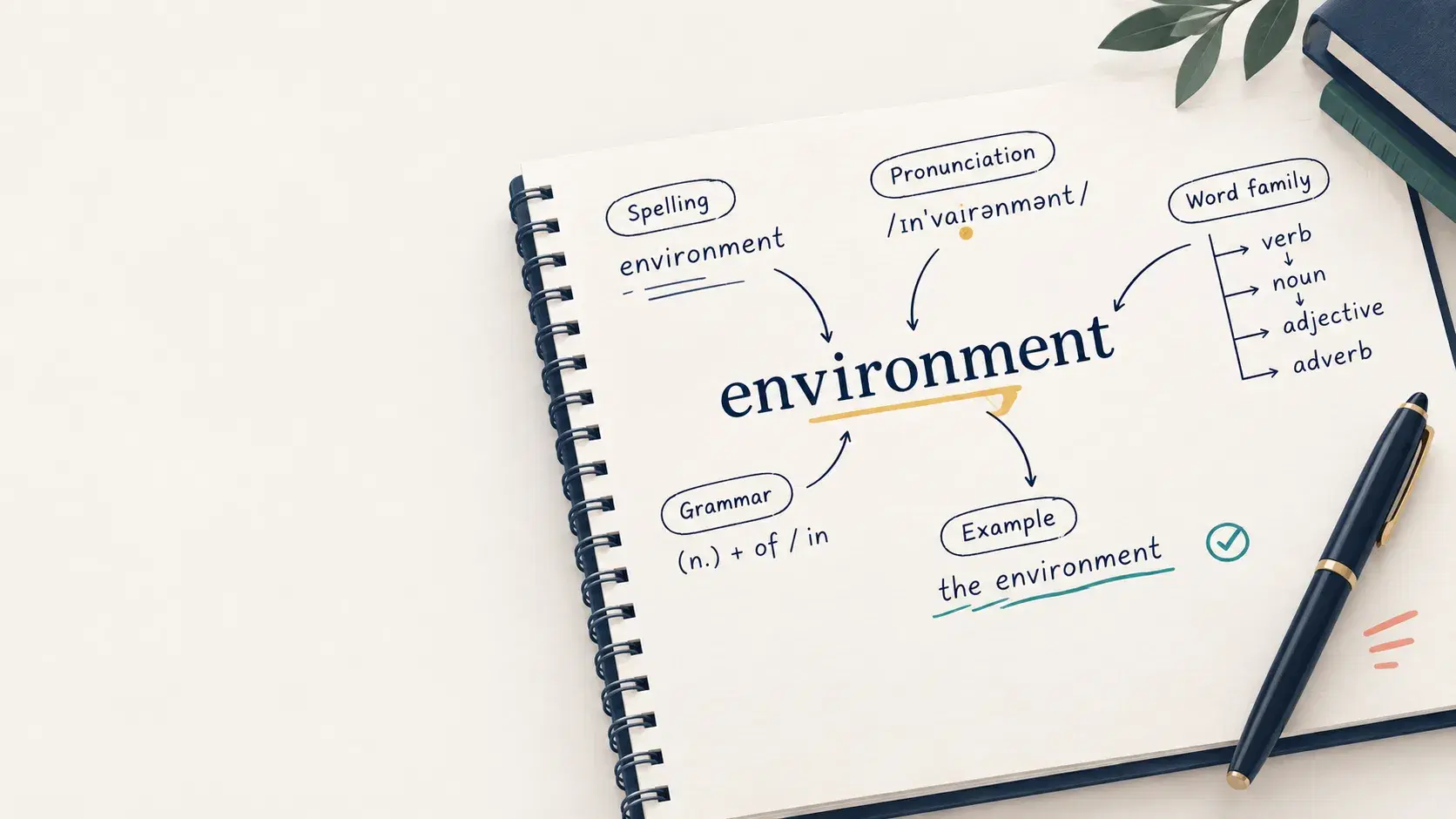
How to Learn IELTS Vocabulary Properly
Knowing a definition isn't knowing a word. An examiner's method for learning IELTS vocabulary in depth: spelling, grammar, collocation and active use.