
IELTS Reading Techniques: Skimming, Scanning & Timing
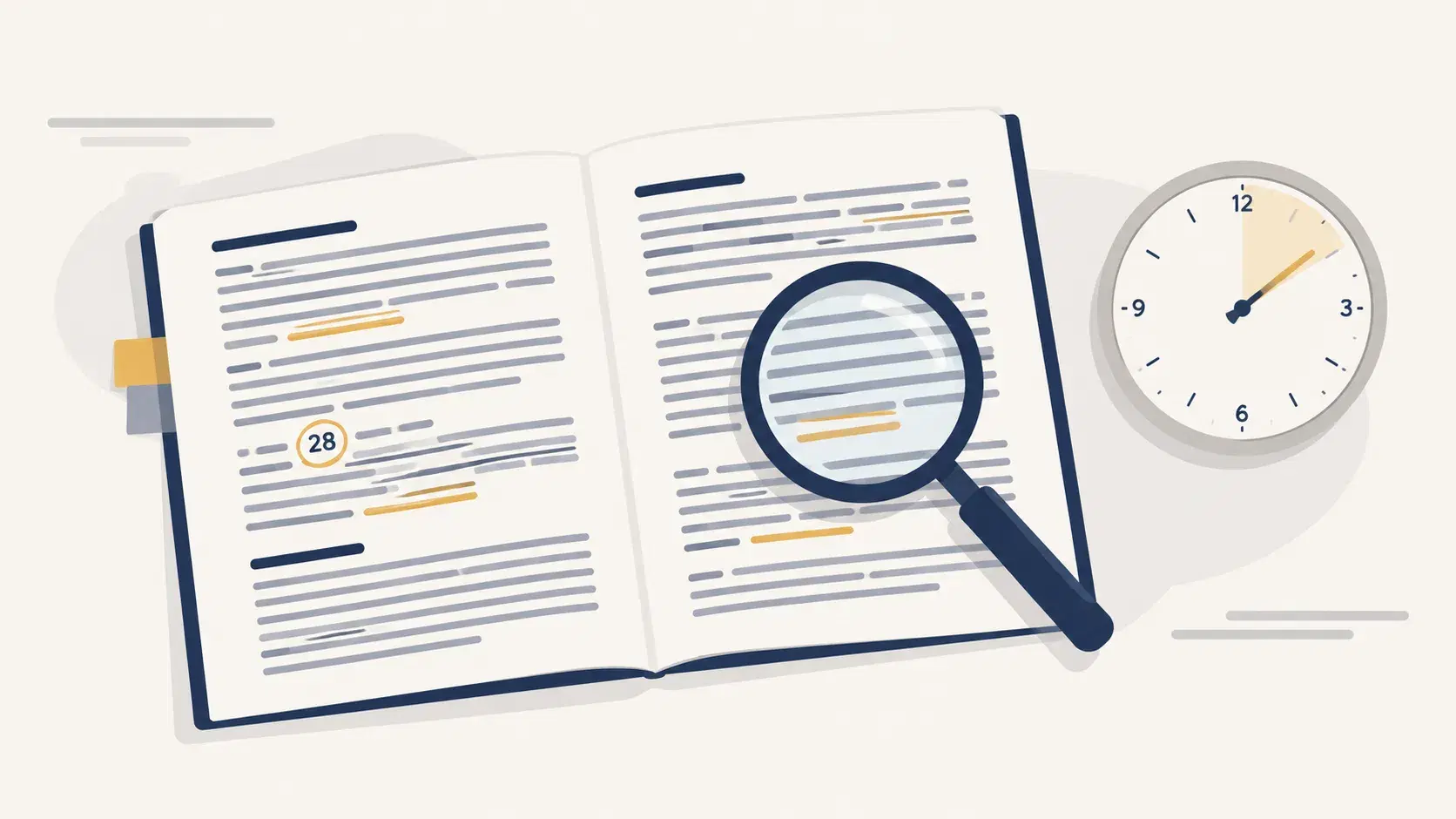
Zadway's Reading practice lets you drill every technique in this guide on full-length, exam-style passages until working under a countdown feels routine rather than stressful.
What the examiner is actually testing
IELTS Reading is not a vocabulary test, and it is not really a test of whether you can understand English - most candidates at this level already can. It is a test of whether you can locate specific information, follow a detailed argument, and recognise a writer's opinion or purpose, accurately and quickly, across three increasingly demanding passages in a single 60-minute sitting.
Each of the 40 questions is worth one mark, with no penalty for a wrong answer, and your raw score is converted to a band using a fixed conversion table. That structure matters for strategy: a guess costs you nothing, and a question you spend six minutes on is worth exactly the same as one you answer in ninety seconds. The techniques below exist to help you spend your time where it earns marks, rather than where a passage happens to be difficult.
Skimming vs scanning: two different tools for two different jobs
Almost every IELTS Reading strategy comes back to these two skills, and most of the marks lost in this section come from candidates using the wrong one at the wrong moment - usually scanning for keywords when they should be skimming for an idea, or reading every word when they should be scanning for one detail.
What skimming actually is
Skimming means reading quickly to grasp the general shape of a text - what a paragraph is broadly about, or how an argument develops - without absorbing every detail along the way. In practice this usually means reading the first and last sentence of each paragraph and letting your eyes move loosely over the rest, rather than reading every word in sequence.
Skimming is what you use to build a mental map of a passage before you start answering questions, and it is the main tool for any question that asks about a paragraph's overall idea rather than one fact inside it.
What scanning actually is
Scanning means moving your eyes over a text hunting for one specific piece of information - a name, a date, a number, or a distinctive word or phrase - while deliberately ignoring everything else around it. You are not trying to understand the sentence you are scanning through; you are trying to find the point where you need to stop skimming past it and start reading properly.
Scanning is fast precisely because it is shallow. The moment you find what you are looking for, scanning's job is done and a different kind of reading needs to take over.
When to use which
| Question type | Use this first |
|---|---|
| Matching headings | Skim each paragraph for its main idea |
| True / False / Not Given | Scan for the keyword, then read locally |
| Multiple choice on a specific detail | Scan for the keyword or number |
| Multiple choice on main idea or purpose | Skim the paragraph or passage |
| Sentence, note or summary completion | Scan for the keyword, then read locally to confirm the exact word |
| Matching information or features | Scan for names, dates and proper nouns across the whole passage |
As a rule of thumb: skim first to know where to look, then scan to find what you're looking for, then read closely to confirm it means what the question needs it to mean.
Why vocabulary and synonym awareness make or break your score
Skimming and scanning only work if you can recognise what you are looking for once you arrive at it - and this is where a large number of otherwise capable candidates lose marks. IELTS Reading passages are deliberately written so that the exact wording of a question almost never appears in the passage itself.
The passage will not use the question's exact words
If a question refers to a company's financial difficulties, the passage is far more likely to describe economic hardship, note that the business was struggling to make ends meet, or simply state that it was losing money. This is not an accident - it is a deliberate design choice, because IELTS is testing whether you understand meaning, not whether you can pattern-match strings of letters.
The practical consequence is that keyword scanning alone will only get you to the right area of the passage. Confirming the actual answer depends on recognising that the paraphrase in front of you means the same thing as the question, which is a vocabulary skill, not a reading-speed skill.
Build a mental bank of common paraphrase patterns
A few patterns cover most of the paraphrasing you will meet in the test:
- Synonyms - increase becomes rise, grow, or climb.
- Negation of the opposite - rare becomes not common.
- General-to-specific shifts - transport in a question might appear as buses and trains in the passage, or the reverse.
- Nominalisation - the government decided to... becomes the government's decision to..., turning a verb into a noun.
You will not learn every paraphrase pattern from a list - you build this skill by meeting genuine synonym pairs again and again in real passages, which is a large part of why wide, active reading practice outperforms vocabulary lists on their own. Zadway's vocabulary bank is built around exactly this problem, and the case study on looking up unfamiliar words while reading shows how that habit compounds over time.
A step-by-step method for reading under time pressure
Putting skimming, scanning and paraphrase-awareness together, here is a repeatable sequence you can apply to almost any question in the test.
Step 1: Skim before you touch a single question
Spend one to two minutes reading the title, any subheadings, and the first and last sentence of each paragraph. You are not trying to understand every idea in the passage - you are building a rough map of what each paragraph is about, so that later, when a question mentions a topic, you already have a sense of roughly where in the passage to look.
Step 2: Read the questions and underline keywords
Before scanning the passage, identify the words in the question most likely to point you to the right sentence: names, numbers, dates, and distinctive nouns or adjectives that are unlikely to be paraphrased (a proper noun like a place name usually survives paraphrasing intact, whereas a common adjective like important almost certainly will not).
Step 3: Predict what kind of answer you need
Before you start scanning, decide what shape the answer should take - a number, a person's name, a short noun phrase for a gap, or a True/False/Not Given judgement. This single habit prevents a common and costly mistake: writing a grammatically wrong word into a gap simply because it was the first matching idea you found nearby.
Step 4: Scan for the keyword's location, not the answer itself
Move your eyes quickly down the passage looking for your underlined keyword or an obvious paraphrase of it. At this stage you are not trying to understand the passage - you are trying to find the point where the topic of your question appears, so resist the urge to read every sentence in full on the way there.
Step 5: Slow down and read locally once you find it
Once you have located the relevant area, switch modes completely. Read that sentence, and usually the one before and after it, carefully - comparing what it means against what the question asks, rather than checking whether the words match. This is the step where synonym awareness earns its keep.
Step 6: Answer and move on
Apply a simple pivot rule: if fifteen to twenty seconds of scanning produces nothing useful, stop. Make your best guess based on elimination, note the question number so you can return if time allows, and move on. Because there is no penalty for a wrong answer, a guess recorded now is strictly better than an answer left blank because you ran out of time later.
Strategies for the question types that cause the most problems
The general method above covers most situations, but a handful of question types have their own traps worth knowing in advance.
True / False / Not Given (and Yes / No / Not Given)
This is consistently one of the highest-error question types, mostly because of one specific confusion: Not Given does not mean unlikely or false - it means the passage simply does not address the claim either way, even if the claim sounds perfectly plausible or matches what you personally believe to be true.
- True / Yes - the statement matches what the passage says.
- False / No - the statement directly contradicts the passage.
- Not Given - the passage gives no clear information to confirm or deny it.
Watch closely for absolute words such as all, never, or only - a passage that supports a moderate claim often does not support the absolute version of it, which turns what looks like a True into a False.
Matching headings
This is the clearest exception to "scan first" - matching headings genuinely requires skimming, because you need each paragraph's main idea, not one detail inside it. Read the first and last sentence of a paragraph, ask yourself what it is mostly about, and only then look at the list of headings. The heading list is usually written with several close distractors, so decide on the paragraph's idea in your own words before you compare it against the options, rather than picking whichever heading contains a word you recognise from the paragraph.
Sentence, summary and note completion (fill-in-the-blank)
Read the word-limit instruction before you write anything - NO MORE THAN TWO WORDS AND/OR A NUMBER is common, and a technically correct answer that breaks the word limit scores zero. Once you have found the right word in the passage, check that it fits the grammar of the sentence you are completing: if the gap needs a noun, a verb copied straight from the passage will not fit, even if it is the right underlying idea.
Matching information or features
These questions ask which paragraph, or which named person or place, a piece of information relates to. Scan for names, dates and proper nouns rather than ideas, since these survive paraphrasing far more reliably. Remember that in a matching-information task a single paragraph can sometimes be the answer to more than one question, so do not assume each paragraph is only "used up" once.
Managing your 60 minutes across three passages
All three passages carry the same number of marks per question, but they are not equally difficult - the third passage is typically the longest and most demanding. Splitting your time evenly across all three is a common and costly mistake; a slightly uneven split that respects this difficulty curve protects your overall score better.
| Passage | Suggested time | Why |
|---|---|---|
| Passage 1 | ~17 minutes | Usually the most straightforward - move efficiently rather than lingering |
| Passage 2 | ~20 minutes | Moderate difficulty - your steady, standard pace |
| Passage 3 | ~23 minutes | Longest and most demanding - build in extra room deliberately |
Treat this as a starting point, not a fixed rule. Practise with a timer until you know your own realistic pace for each passage, and adjust the split accordingly.
There is no time to transfer your answers
Unlike Listening, Reading gives you no separate transfer period. On the computer-delivered test you type each answer directly into the answer box as you go, so every minute of your 60 has to cover both reading and answering - there is no later stage where you can catch up on unanswered questions from memory. Build the habit of recording an answer the moment you are confident in it, rather than planning to "come back and fill everything in at the end".
Common time-wasting mistakes that cost students marks
- Reading the whole passage word for word before looking at a single question. This can burn ten minutes or more before you have answered anything at all.
- Getting stuck on one difficult question. A question that resists you for several minutes is not becoming easier - it is only taking time away from questions you could answer quickly.
- Ignoring the word-limit instruction. A correct idea written in too many words scores exactly the same as a wrong answer: zero.
- Re-reading the whole passage from the start when an answer isn't where you expected. Return to the general area suggested by your mental map instead of starting over.
- Leaving a question blank. With no penalty for a wrong answer, a blank answer is the only response guaranteed to score nothing.
- Splitting your time evenly across all three passages, when the increasing length and difficulty of Passage 3 usually deserves more of your remaining time, not an identical share.
A worked example: applying the method to one question
Question: The company's new policy was adopted primarily because of cost savings. (True / False / Not Given)
Passage sentence: Although the new policy was expected to reduce costs, the primary motivation behind its adoption was to improve employee morale following a difficult year.
Working through it: Scanning for "cost savings" leads straight to "reduce costs" - a clear paraphrase, so this looks like the right sentence. But reading it locally, rather than stopping at the keyword match, shows the sentence actually names a different primary motivation - employee morale. The question's claim is directly contradicted, not confirmed, which makes the answer False, not True.
A candidate who scans for the keyword and stops there, without the extra step of reading for meaning, would very likely mark this True - which is exactly the trap Not Given and False options are designed to set.
Frequently asked questions
How many questions are in the IELTS Reading test, and how much time do I get?
Both Academic and General Training Reading have 40 questions across three passages, to be completed in 60 minutes. On the computer-delivered test you type your answers directly into the answer boxes, so there is no separate transfer time - unlike Listening, every minute of the 60 has to cover both reading and answering.
Do I lose marks for a wrong answer in IELTS Reading?
No. IELTS Reading has no penalty for an incorrect answer, so a blank answer and a wrong guess cost you exactly the same - nothing extra. Never leave a question unanswered; if you are running out of time, make your best guess based on whatever you have managed to read.
Should I read the whole passage before looking at the questions?
For most question types, no. Reading a 900-word passage in full before you even know what you are looking for usually costs more time than it saves. A brief skim to understand the general shape of the passage, followed by scanning driven by the questions themselves, is faster for the majority of question types - matching-headings tasks are the main exception, since they require a clearer sense of each paragraph's main idea.
How important is vocabulary for IELTS Reading?
Very. IELTS Reading passages are deliberately written so that they rarely repeat a question's exact wording. Without a working knowledge of common synonyms and paraphrase patterns, keyword scanning alone will send you to the right area of the passage but leave you unable to confirm the answer once you get there - which is why building vocabulary through real reading, not word lists in isolation, pays off directly in this section.
Put this method into practice
Knowing these techniques and executing them fluently under a real 60-minute countdown are different things - the gap between them only closes with timed practice on full passages. Zadway's Reading practice scores your accuracy question by question and shows exactly where time slipped away, so you can see which technique needs more work before test day. Explore how it works, compare plans, or start practising today.
See Also
How to Score High in the IELTS Listening Test
An examiner's guide to IELTS Listening: preview questions before the audio plays, predict answer types, avoid distractor traps, and fix spelling errors.
How to Write an IELTS Writing Task 2 Essay: Step-by-Step
A step-by-step method for planning, structuring and writing a strong IELTS Writing Task 2 essay, from an experienced IELTS examiner and prep teacher.
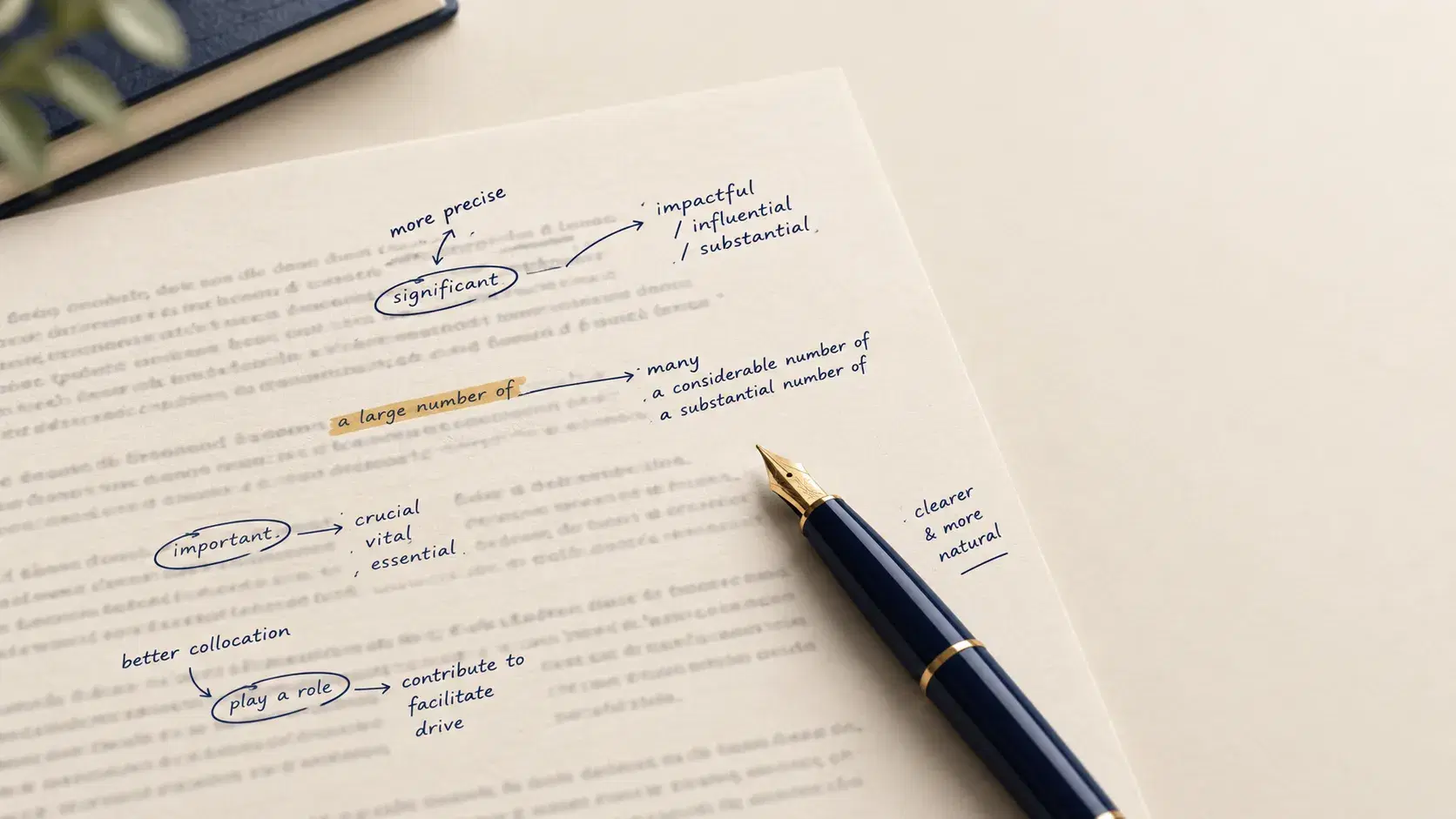
IELTS Vocabulary Accuracy: The Key to a High Score
Learn why IELTS vocabulary accuracy matters more than word count, and follow an examiner's step-by-step method to use words precisely across all four skills.